

The maples are dropping their last leaves, the patio chairs are stacked in the garage, and a new deck probably sits near the bottom of your to-do list. Here is the twist: fall is the best moment to start planning one.
Homeowners who wait until the first 65-degree Saturday in April to call a builder often find the spring calendar booked weeks in advance. The Mitchell Construction Custom Decks crew has watched that pattern repeat across Chicago’s suburbs since 1978. People grilling on a new deck by Memorial Day almost always start the conversation before the first snowfall.
The short answer: Start planning five to seven months before your target finish date. For a deck done by late May, a first conversation between October and December keeps every step on schedule.
Why Fall Planning Wins in Chicago’s Suburbs
A deck looks simple from the patio door. Behind the boards is a chain of steps, and each one takes time on the calendar.
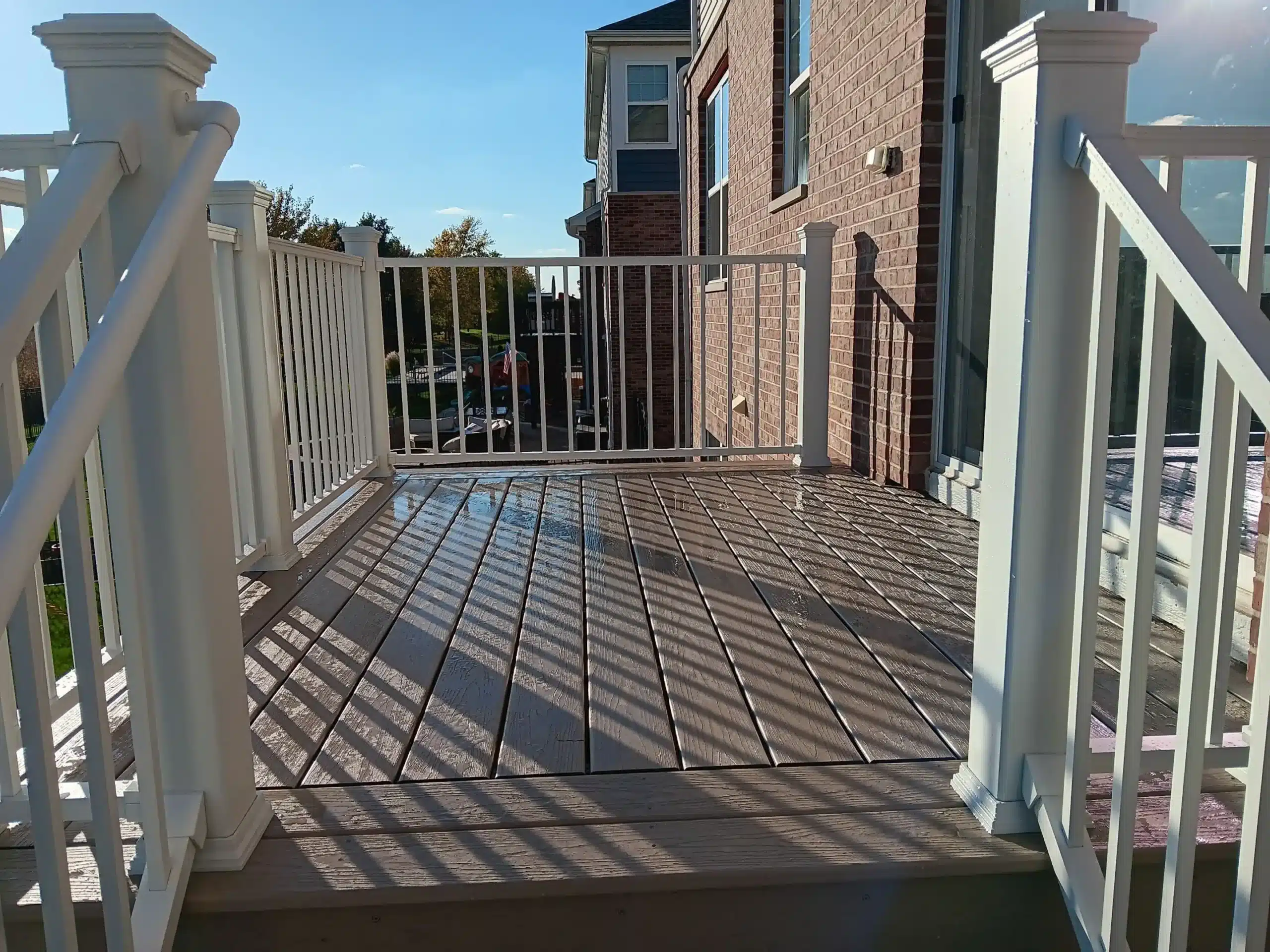
Permits follow their own clock. Villages from Orland Park to Naperville review deck plans before a shovel hits the ground, and many ask for a plat of survey, framing details, and footing specs. Homeowners’ association approval can add another round. Mitchell prepares the drawings, submits the plans, and schedules inspections, yet no builder controls a village’s review queue.
Design deserves room to breathe. A multi-level deck under a pergola, a pool deck with slip-resistant boards, or a covered deck wired for a ceiling fan all call for layout studies, samples, and coordination with licensed electrical or plumbing partners. Rushed choices resurface later as change orders.
Frozen ground sets the pace. Deck footings in northern Illinois must reach below the frost line, commonly 42 inches deep, though your village sets the exact figure. Frozen clay slows any crew. Helical piers screw into the soil to a designed depth with far less excavation and can keep certain projects moving in colder months.
The October 2026 Leading Indicator of Remodeling Activity from Harvard’s Joint Center for Housing Studies expects national home improvement spending to hover near $525 billion through the third quarter of 2027, with growth easing to roughly 1.5%. A flat market rewards careful, well-timed projects, and spring remains the season when deck calendars fill first.
The Spring Deck Countdown
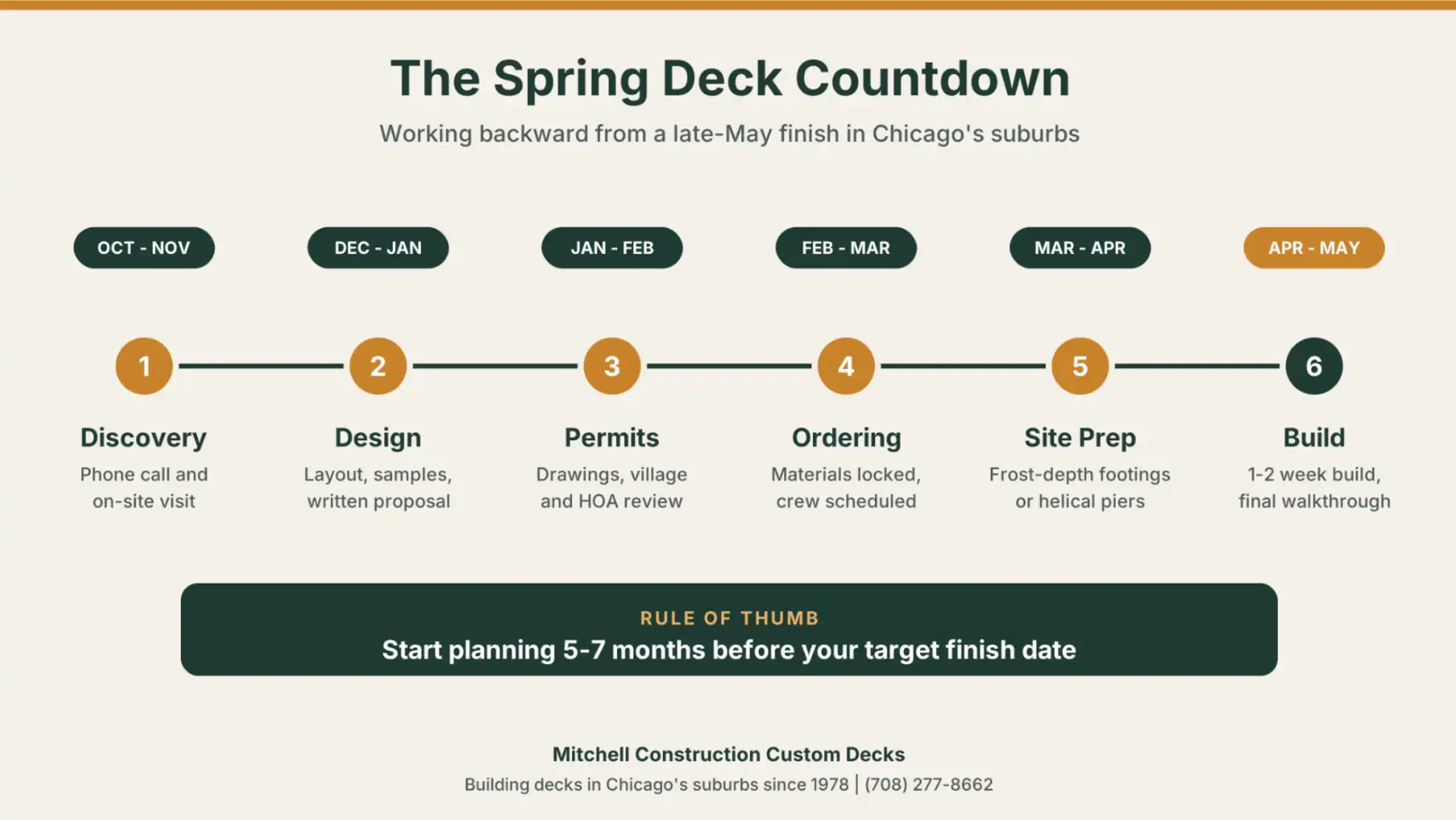
Working backward from a late-May finish in Chicago’s suburbs.
| Timing | Milestone | Your Move | Mitchell’s Move |
| Oct – Nov | Discovery | Walk the yard and note sun, shade, slope, and door locations | Phone consultation, then an on-site visit |
| Dec – Jan | Design and materials | Compare board samples, railings, and lighting | Custom layout and a detailed written proposal covering scope, material costs, and timeline |
| Jan – Feb | Permits and HOA | Sign the proposal and send HOA paperwork | Drawings, plan submission, and permit tracking |
| Feb – Mar | Ordering | Confirm colors, railing style, and lighting layout | Material orders and crew scheduling |
| Mar – Apr | Site prep | Clear the yard and plan equipment access | Layout, frost-depth footings or helical piers, inspections |
| Apr – May | Build and walkthrough | Plan your first evening out there | Construction, final inspection, and a walkthrough |
Pro Tip: Ask your HOA how often its review board meets. Some boards meet only once a month, so a missed submission deadline can push your permit back by weeks.
Decisions That Deserve Winter Attention
The Decking Surface
Winter gives you time to hold samples. As a TrexPro Platinum builder, Mitchell installs Trex composite boards backed by a 25-50 year limited residential warranty with fade and stain coverage, along with TimberTech, Evalast, and MoistureShield lines. Each brand carries its own warranty terms, and the crew walks through them before you sign.
Pro Tip: Look at board samples outdoors in flat November light, then again under a porch lamp at night. Gray and walnut tones shift more than most people expect, and the evening view is the one you’ll see all summer.
The Framing Underneath
The structure beneath the boards determines how flat the surface will look two decades from now. Mitchell offers aluminum and steel deck framing as alternatives to pressure-treated lumber.
| Framing System | Lifespan or Warranty | Standout Trait | Smart Pick When |
| Pressure-treated lumber | Commonly degrades in 15-20 years | Lowest upfront cost | Budget leads on a simple ground-level deck |
| TimberTech aluminum | Lifetime Limited Warranty on major components | A 2×8 aluminum joist performs like a 2×12 wood joist; Class A flame spread rating | You’re pairing it with TimberTech decking and railing |
| Fortress Evolution steel | 25-Year Limited Warranty | Longer spans mean fewer posts; Black Sand powder-coat finish | Second-story or multi-level decks with open views below |
The Return on Your Investment
Composite decks hold their value well at resale. The 2025 Cost vs Value Report from the Journal of Light Construction puts the national average composite deck addition at $25,096, with an estimated resale value of $22,199. That works out to 88.5% of the cost recovered, placing it in the top third of the 28 projects the report tracks.
Features That Need Early Wiring
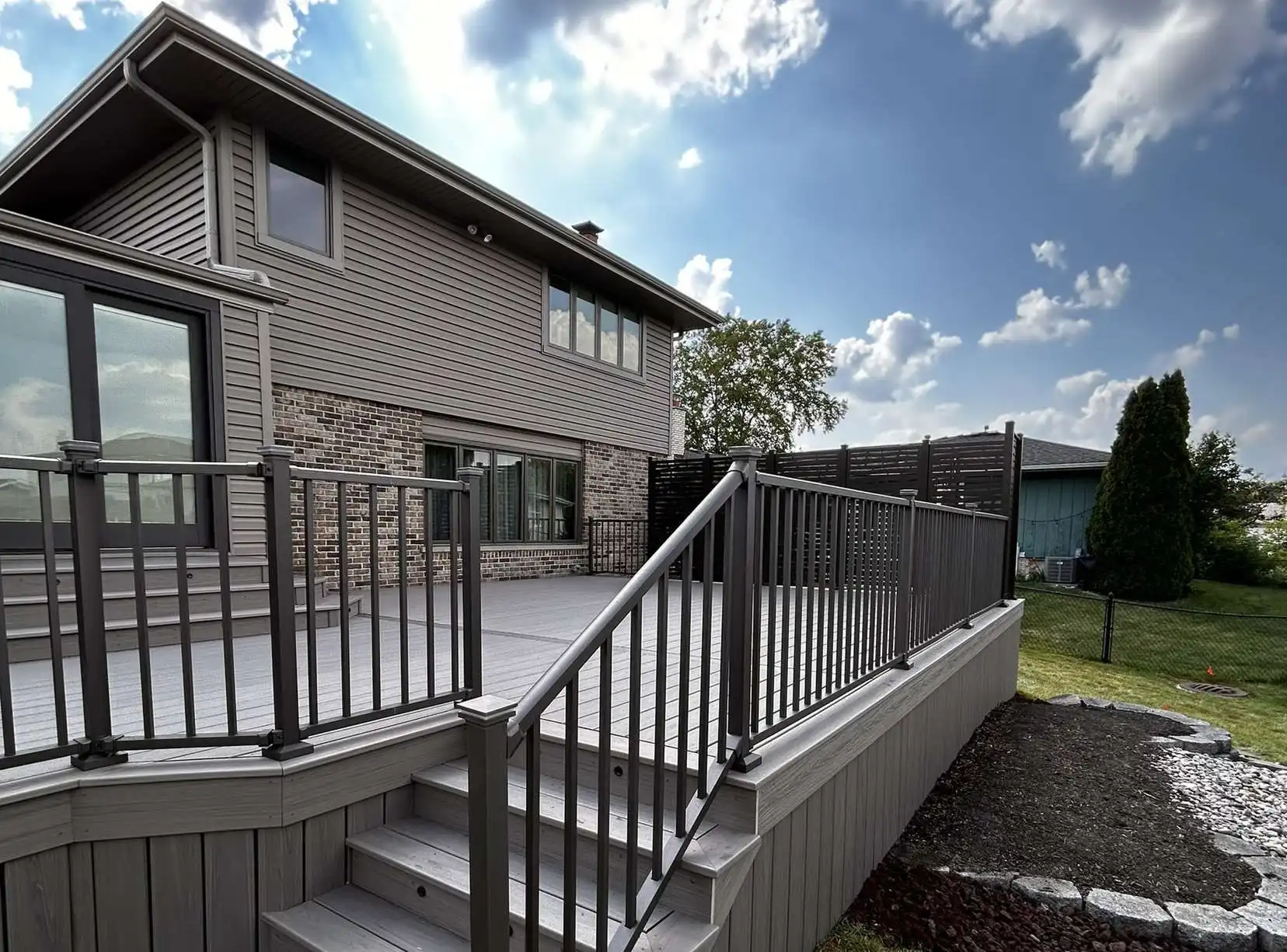
Deck lighting, outdoor kitchens, fire features, and DrySpace under-deck waterproofing for second-story decks all shape the framing plan.
Pro Tip: Settle on recessed stair lights, outlets, and any gas line before the proposal is final. Running wire through finished framing costs more than planning for it on paper.
What If You Wait Until Spring?
A March call can still produce a great deck; it simply pushes the finish line toward midsummer. If your current deck’s structure is sound, remodeling and resurfacing can swap out tired boards and railings on a shorter timeline. The one plan that rarely works is calling in April and expecting a May finish.
Frequently Asked Questions
Is October too early to plan a deck for spring?
Not at all. October gives you room for a phone consultation, an on-site visit, and a design you’ve had time to sleep on. Most of the early work happens on paper, so cold weather won’t slow anything down.
How long does a deck permit take in the Chicago suburbs?
It depends on the village and how busy its building department is. Plan on several weeks, and add time if your HOA needs to sign off first. Mitchell handles the drawings, submission, and inspection scheduling, so your part is mostly signing paperwork.
Can a deck be built before the ground thaws?
Often, yes. Design, permits, and material orders move ahead regardless of the weather, and some footing work can happen in winter depending on soil, site access, and village rules. Mitchell’s guide to building a deck in winter in Illinois explains what can proceed and what must wait for thawed ground.
How long does construction take once it starts?
Once permits are secured, most projects wrap up in one to two weeks, depending on size. A multi-level deck with a pergola and lighting takes longer than a simple ground-level platform, and your written proposal spells out the timeline.
What should I have ready before my first consultation?
Grab your plat of survey, a rough budget range, and a few photos of decks you love. Jot down how you picture spending time out there, like morning coffee, a dining table for eight, or a hot tub corner. Your HOA guidelines help too.
What does Mitchell’s labor warranty cover?
Every project comes with a 10-year labor warranty. If a construction defect results in structural damage, Mitchell repairs the affected area at no cost to you. Board and railing coverage comes separately from each manufacturer.
Start Your Spring Deck Plan With Mitchell
Mitchell Construction Custom Decks has built decks, patios, and outdoor living features across Chicago’s suburbs since 1978, with in-house carpenters on every core build and NADRA Ambassador and TrexPro Platinum credentials behind the work. Financing through Synchrony Bank includes no monthly interest if you pay off the balance within 18 months, with approved credit.
Get An Estimate or call (708) 277-8662.