

Skim this section for the short answer: Building a deck in winter can be a smart move when the site, weather, materials, permit timing, and construction sequence support it. Winter gives homeowners time to plan the structure, compare materials, review permits, and get ahead of spring demand, but it does not guarantee lower costs, faster completion, or uninterrupted construction.
Picture a backyard after the first hard freeze. The grass is pale and stiff, the gate latch is cold to the touch, and the deck footprint is easier to imagine because summer furniture, planters, grills, and foot traffic are no longer filling the space.
That quiet season can be useful. You can study traffic flow, stair placement, door transitions, sunlight, privacy, snow drift patterns, and where water moves after a thaw. But winter also turns ordinary construction details into technical decisions. Frozen soil, footing depth, board movement, fastener spacing, inspection timing, ledger flashing, and safe site access all matter more when temperatures move above and below freezing.
The better question is not simply, “Can you build now?” A more useful question is, “Which parts of my deck can be designed, permitted, staged, or built in winter without compromising the foundation, framing, fastening, drainage, or moisture management?”
What Are the Benefits of Building a Deck in Winter?
The benefits of building a deck in winter usually come from better planning, not from forcing construction through bad conditions. The slower season gives homeowners time to make technical decisions before spring calendars tighten and materials become harder to secure.
The best winter deck planning conversations go beyond board color. This is the time to talk through beam locations, post spacing, stair direction, joist layout, railing post blocking, drainage below the deck, lighting pathways, and whether the house connection needs special flashing or inspection before it is covered.
- More Scheduling Options: Winter can give you a better chance to start conversations before the spring rush. Deck builder availability in winter still depends on workload, weather, inspections, and site conditions, so ask about real schedule openings instead of assuming crews are wide open.
- Time to Clarify the Plan: A winter consultation gives you space to define the deck’s size, traffic flow, stair runs, landing locations, railing style, lighting plan, grill zones, and long-term use. That planning remains valuable even if excavation, footings, or surface installation must wait for better conditions.
- Room to Compare Materials: Starting early lets you compare wood, composite, PVC, and mineral-based decking without rushing into the first available color or product line. If you are researching low-maintenance options, review custom deck construction, Trex composite decking, and TimberTech decking before choosing.
- Better Structural Coordination: Early planning gives the contractor time to coordinate footing layout, beam spans, joist spacing, stair geometry, and railing post blocking. Those hidden details affect how well the finished deck handles people, furniture, snow, wind, and seasonal movement.
Pro Tip: Treat a winter start date as a planning advantage, not a promise that every construction task can happen every day.
Recent remodeling data supports the idea that deck planning deserves careful attention. Zonda’s 2025 Cost vs. Value Report listed deck additions among strong exterior home improvement returns, with wood deck additions recouping 94.9 percent and composite deck additions recouping 88.5 percent on average. Your actual return will vary, but the point is clear: a deck is a structural outdoor living investment, not a weekend upgrade.
Material timing is another reason winter planning matters. Wood-plastic composite decking represents roughly 28 percent of U.S. decking demand, and homeowners often want specific board colors, railing profiles, fascia, lighting, and hidden-fastener systems. Waiting until peak season may limit your choices or push the build back.
| Winter Advantage | What It Helps With | What to Ask Before You Commit |
|---|---|---|
| Earlier planning | Layout, materials, budget, permits, and sequencing | Which decisions should be finalized before construction starts? |
| Schedule flexibility | Consultation timing, drawings, selections, and project preparation | What does your winter schedule actually look like right now? |
| Clearer yard visibility | Stair placement, grade changes, drainage patterns, and access routes | Will snow cover or frozen ground limit the site review? |
| Material lead time | Decking, railing, lighting, fascia, and fastener selections | Are any colors, boards, railing systems, or lighting packages likely to take longer? |
| Structural planning | Footing layout, beam spans, joist spacing, stair support, and rail blocking | Will the drawings show how loads transfer from the deck surface to the foundation? |
If your main goal is to beat seasonal demand, this guide on scheduling a deck before the spring rush can help you think through timing, design decisions, and contractor availability.
Can You Build a Deck in Winter?
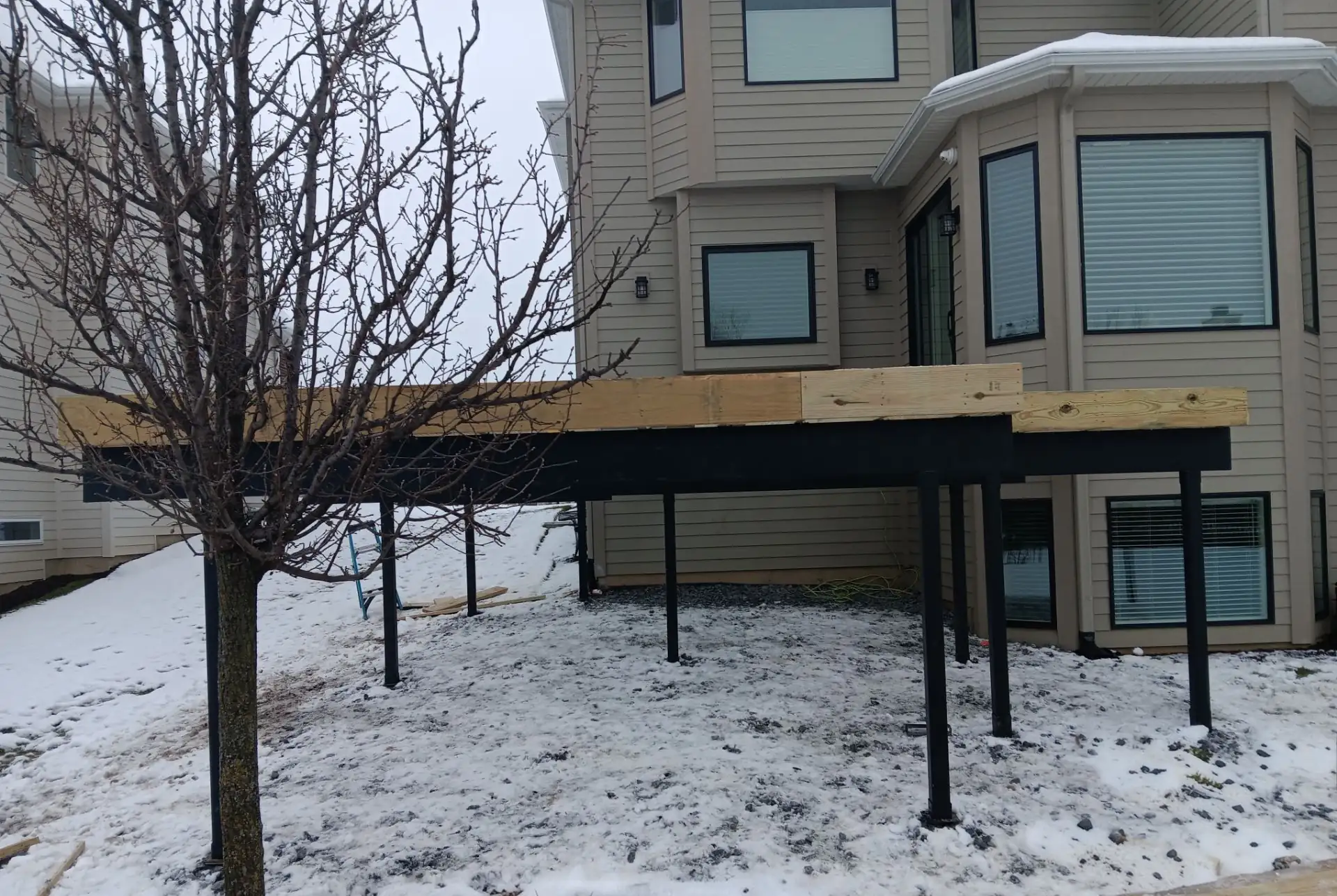
Yes, building a deck in winter can be possible when conditions allow each construction step to meet safety, code, and product requirements. Cold weather alone does not stop every deck project, but frozen ground, snow, ice, wet access, shorter daylight, and material instructions can all change the sequence.
Think of a deck as a load path, not a platform. People, furniture, grills, snow, stair traffic, railing loads, and the deck frame push forces through the boards, joists, beams, posts, brackets, footings, and soil. If one part of that chain is rushed, the finished deck may look fine at first but move, settle, rack, or pull away over time.
Many residential deck surfaces are designed around a minimum live load such as 40 pounds per square foot, plus the dead load of framing and finishes and any local snow-load considerations that apply. That is why foundation size, beam spans, joist spacing, connection hardware, and stair support should be based on the approved design, not a generic rectangle sketched in the yard.
- Check Ground and Footing Conditions: Frozen or saturated soil can affect excavation, pier layout, footing inspection, and long-term support. Ask whether conventional footings, helical piers for decks, or another approved foundation approach fits your site and local requirements.
- Ask About Concrete Requirements: If the design uses concrete, temperature can affect curing, protection, timing, and inspection readiness. Ask how the crew will decide whether conditions are suitable and what phase may need to pause if the forecast changes.
- Confirm Material Instructions: Decking, railing, fasteners, adhesives, trim, joist tape, flashing, and framing products can have specific storage and installation requirements. Ask whether the selected products allow cold-weather installation and what spacing, handling, or acclimation details matter.
- Plan for Weather Windows: Winter deck construction often depends on safe work periods between snow, ice, wind, rain, and freeze-thaw cycles. A realistic schedule includes weather buffers instead of assuming every date on the calendar is a workday.
Pro Tip: Ask your contractor to separate weather delays from construction delays. Weather delays mean the site is temporarily unsafe or unsuitable, while construction delays usually involve materials, inspections, permits, or sequencing.
In many Illinois communities, deck and porch foundations are commonly designed to reach about 42 inches below grade to get below the local frost line, though the final requirement depends on the municipality, soil conditions, and approved plans. Frost movement matters because wet, shallow, or poorly drained soil can lift supports unevenly and create movement between posts, stairs, landings, and the house connection.
The 2024 International Residential Code continues to treat decks as structural systems, not decorative platforms. That means the ledger, beams, joists, posts, stairs, lateral bracing, footings, and deck railings need to work together.
Ledger attachment deserves special attention because it is one of the most important moisture and load-transfer points in the entire deck. The ledger is where the deck meets the home, so it needs proper fastening into structural framing, correct flashing, a drainage path, and inspection before it becomes hidden by joists and decking.
Visual Guide: The Winter Deck Decision Path
1. Site access: Can crews safely reach the backyard with tools, materials, equipment, and temporary protection without creating an icy or rutted path?
2. Foundation plan: Can footings, piers, or support systems be installed to the required depth and capacity under current ground conditions?
3. Product requirements: Do decking, railing, fastener, flashing, adhesive, joist tape, and finishing products allow installation in the expected temperatures?
4. Inspection timing: Can the local review process support the proposed sequence, especially before holes are backfilled or framing is covered?
5. Moisture control: Will grading, drainage, joist protection, under-deck systems, or flashing need to be coordinated before decking goes down?
6. Framing layout: Are joist spacing, beam spans, post locations, stair stringers, and rail blocking coordinated with the selected decking and railing system?
7. Homeowner flexibility: Can your household tolerate weather pauses, temporary yard disruption, material staging, and schedule adjustments?
For a deeper look at the cold-weather build question, read Can You Build a Deck During Winter in Illinois?. It explains in more detail how weather, soil, permits, and material handling affect winter deck construction.
How Can You Decide Whether Winter Is the Best Time to Build a Deck?
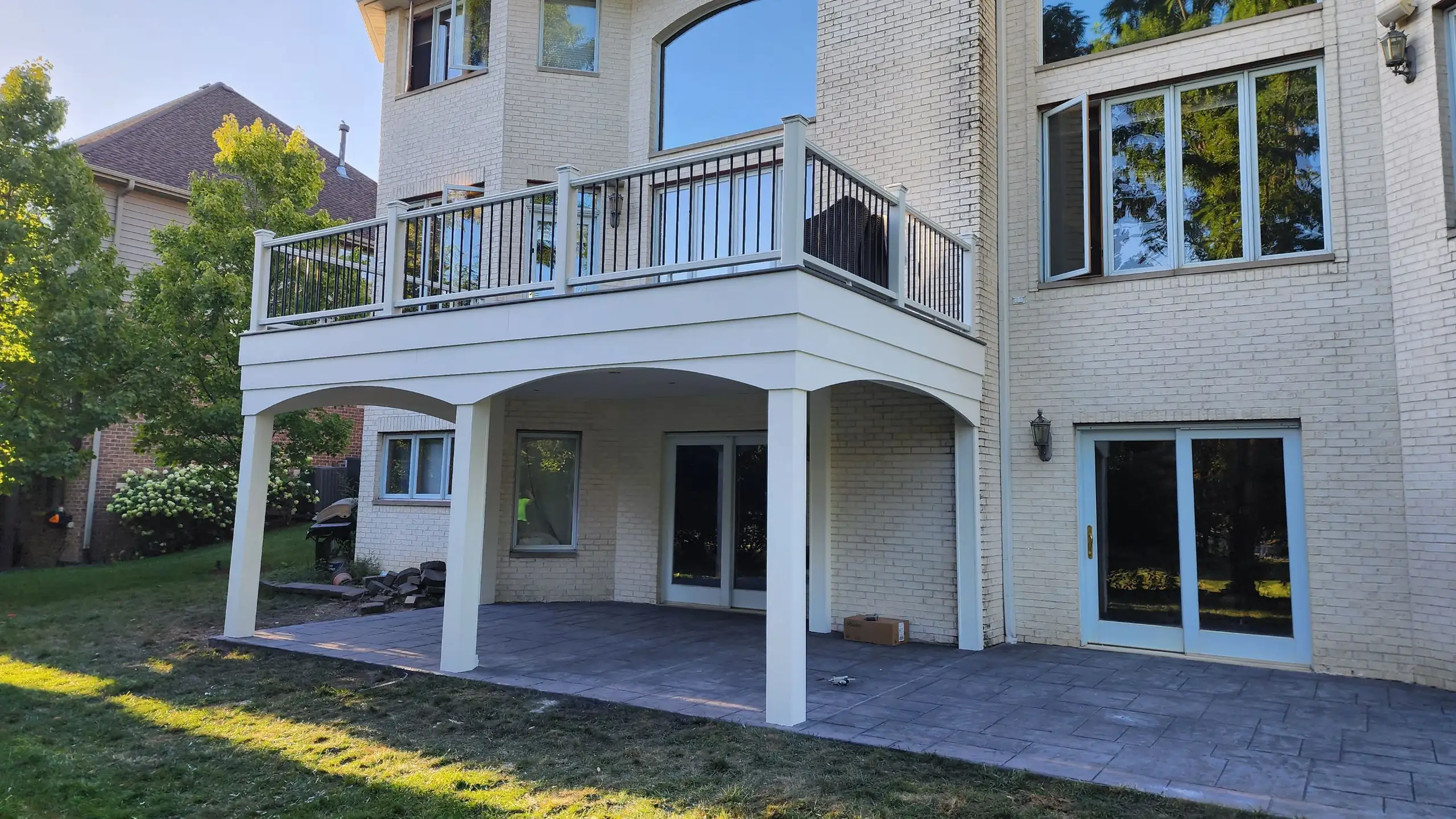
Winter may be the best time to build a deck when the project’s design, foundation, materials, schedule, and homeowner expectations align with the season. It may be the wrong time if you need a firm completion date, the site has poor winter access, or key construction steps depend on warmer conditions.
A smart winter decision starts with the parts of the deck you will not see after construction. The ledger must be flashed correctly. Posts must transfer loads into suitable supports. Joists need spacing that matches the decking product. Rail posts need blocking and hardware. Stairs need consistent geometry, code-compliant landings, and safe transitions to grade.
- Understand Cost Drivers: The cost to build a deck in winter depends on size, height, layout, materials, foundation needs, access, demolition, stairs, railings, lighting, drainage, and site protection. Winter does not automatically reduce the quote, so ask what is included and what could change if weather slows the work.
- Compare the Full Schedule: Ask which phases can happen now, which depend on ground or temperature conditions, and which require inspections before the next phase begins. A possible start date is not the same thing as a reliable completion date, so discuss both before choosing a season.
- Match Timing to Your Priorities: Winter deck building advantages matter most when you value early planning and can handle schedule flexibility. If your project must be finished before a specific event, a different start window may give you a more predictable path.
- Choose Materials With the Season in Mind: Wood, composite, PVC, and mineral-based decking respond differently to moisture, temperature, fastening, and expansion. If you are comparing long-term performance, the Trex vs. TimberTech vs. mineral-based decking comparison can help you think beyond color and price.
Pro Tip: Ask for the schedule assumptions in writing. A useful winter proposal should explain what can move forward, what could pause, and what site conditions might change the plan.
| Project Factor | Why It Matters in Winter | Technical Question to Ask |
|---|---|---|
| Foundation type | Frozen soil, frost depth, drainage, and bearing conditions can affect support installation | Are footings, piers, spacing, and depth based on my deck layout or a standard assumption? |
| Deck height | Elevated decks need more structural coordination, bracing, stair planning, and safe access | How will posts, beams, stairs, lateral bracing, and rail loads be connected? |
| Material choice | Products can have cold-weather handling, expansion, gapping, and fastening requirements | What manufacturer instructions control winter installation for my selected boards? |
| Ledger connection | The house connection must manage load transfer, flashing, moisture, and lateral movement | How will the ledger be flashed and attached, and what inspection applies before it is covered? |
| Joist layout | Composite, PVC, diagonal layouts, picture framing, and stair treads can require specific support spacing | Does the framing plan match the decking manufacturer’s span and fastening requirements? |
| Railing post blocking | Rail posts transfer lateral loads into the frame, not just the deck boards | Where will blocking, hardware, and post connections be installed before decking covers the frame? |
| Existing deck condition | Demolition may reveal framing decay, poor flashing, ledger problems, or old footing movement | Is deck remodeling or resurfacing realistic, or is replacement the safer option? |
Material choice deserves special attention in winter. Composite and PVC decking expand and contract with temperature changes, so board spacing set on a cold January morning may behave differently during a humid July afternoon. Hidden fasteners, butt joints, picture-frame borders, fascia, stair treads, and breaker boards all need product-specific spacing.
For elevated decks, winter is also the right time to talk about the space underneath. If you want dry storage, a covered patio feel, lighting, fans, or finished ceiling panels below a second-story deck, coordinate an under-deck waterproofing system before you lock in framing and decking decisions.
If you are weighing a deck against another outdoor upgrade, the deck vs. patio cost comparison can help you think through elevation, drainage, maintenance, budget, and how you want the space to function. If you already have a deck, the winter deck maintenance guide can help protect it while you plan your next step.
Building a Deck in Winter FAQs
Can you build a deck in winter if the ground is frozen?
Sometimes, but frozen ground changes the foundation conversation. If the project uses conventional footings, digging and inspection may be harder or delayed. In some cases, a contractor may discuss helical piers or another approved foundation method, but the right answer depends on soil, access, loads, code requirements, drainage, and the approved design.
Is winter deck construction cheaper?
Not automatically. Winter may offer planning or scheduling advantages, but the cost still depends on the deck’s size, height, materials, stairs, railings, foundation, demolition, access, permits, and site conditions. A lower winter price isn’t helpful if the scope excludes footings, flashing, rail blocking, lighting prep, joist protection, or inspection requirements.
What temperature is too cold to build a deck?
No single temperature applies to every deck project. The limit depends on the task, the selected products, ground conditions, crew safety, and manufacturer instructions. Concrete, composite boards, fasteners, adhesives, flashing tapes, joist protection products, and railing systems may each have different requirements.
Can decking materials be stored outside before installation?
Often they can, but storage should follow the manufacturer’s instructions. Materials may need to be kept level, supported, covered, ventilated, or protected from standing moisture. Ask where materials will be staged and how they will be protected during snow, rain, and freeze-thaw cycles.
Should I wait until spring to call a deck contractor?
If you want a deck for spring or summer, waiting until spring can put you behind homeowners who started planning earlier. Calling in winter gives you more time to discuss design, permits, materials, and schedule flexibility. Even if construction waits, the planning work can make the build smoother when conditions improve.
When can I use a newly built deck?
Wait until construction is complete, required inspections are approved, and the contractor confirms the deck is ready for normal use. If the project includes coatings, lighting, stairs, railings, under-deck drainage, or specialty products, those items may have their own completion or curing requirements. Ask before moving furniture, grills, planters, or heavy items onto the surface.
Discuss Building a Deck in Winter With Mitchell Construction Inc
Building a deck in winter can be practical when the project, property, and weather conditions align. The smartest winter projects do not rush the season. They use the season to ask better questions, confirm technical details, and decide what can move forward safely.
Mitchell Construction Inc. can help you evaluate your site, timeline, material preferences, foundation approach, framing layout, moisture details, and construction sequence. If you want a deck ready for warmer weather, winter can be a productive time to review the layout, compare materials, discuss budget expectations, and identify the right next step.
For project-specific guidance, request a custom deck consultation and ask which parts of your project can move forward in winter and which parts should wait for better conditions.